Burpee, GMO And Monsanto Rumors Put To Rest

The Internet has rapidly changed the way we do everything from banking and booking reservations to seeking advice from fellow gardeners. Certainly, it is a very convenient place to retrieve information and share ideas.

However, there is a danger to the rapid exchange of unverified information, which few seem to mention:  the spreading and accepting of misinformation from false sources.  Perhaps the folks who spread lies, consciously or unconsciously, were not taught to check their source. Perhaps they don’t care to take the time.

This brings me to the heart of my post.  I and others at Burpee are asked frequently about our alleged connection to Monsanto and whether we sell GMO seed.  We have even been accused of being owned by Monsanto on the Internet.  I’ve decided to address these questions and false allegations formally with the hopes that someone out there in cyberspace may refer back to this blog post for information on these issues—straight from the source.

For the record, I own W. Atlee Burpee & Co.  Burpee is NOT owned by Monsanto.  We do purchase a small number of seeds from the garden seed department of Seminis, a Monsanto subsidiary, and so do our biggest competitors. We do NOT sell GMO seed, never have in the past, and will not sell it in the future.

Recently I was called on the telephone by a blogger from Chicago named Mr. Brown Thumb.  This was a “first”.  Most bloggers fancy themselves to be journalists.  Yet, oddly, they steadfastly ignore the rules of  journalism, such as contacting sources and checking facts.  Not so Mr. Brown Thumb. His diligence in taking the time to do research for his blog is highly commendable.  Despite the ambiguous title of his post, I greatly appreciate that he had the courage to ask hard questions and took the time to study my answers.

With a few exceptions—minor errors of names and dates— Mr. Brown Thumb (Ramon Gonzalez) got it right.  He is “the real deal”.  Please read him at http://www.chicagonow.com/blogs/chicago-garden/2011/02/can-you-trust-burpee-seeds.html.

I shall add some background.  Our genius founder W. Atlee Burpee innovated vegetable seed and plant selection for the US continent—versus old varieties from Europe that were growing badly in such a different summer climate—from the 1870s to his untimely passing in 1915.  Many years later his son David lost a great asset in the exodus of  Oved Shifress, a key tomato and squash breeder to Israel during the late 1940s.  He hired a new plant breeder named Howard Peto, a second generation immigrant from Canada.  Mr. Peto bred many fine tomatoes, peppers and melons during his five years with the company.  David Burpee moved him to California to open a year ’round breeding center for the US western climate and to economize research and stock (parent)  seed production by avoiding the Pennsylvania winter.

Soon after setting up Burpee’s new operations in California, Mr. Peto decided to divide his time between home garden breeding and breeding for the so-called truck market, medium to large-sized farmers who transport their farm produce by truck to urban markets.  He wished also to breed for juice and canned tomatoes.  However, Mr. Burpee did not wish to breed for any consumer other than the home gardener and the small, local farmer.

Therefore, Mr. Peto quit the Burpee Company in the mid 50s and started up his own company.  His first tomato was ‘Wonder Boy’, an inferior knock-off of ‘Big Boy’, which is the famous home garden hybrid bred in 1948 by Oved Shifriss of Burpee, whom Mr. Peto replaced.  Undoubtedly Mr. Peto used his “garden knowledge” to get his California commercial tomato seed business going.  Nevertheless, he left the Burpee Company amicably.  These were “the old days” when agreements and disagreements were commonly settled with a handshake.

Mr. Peto’s replacement at Burpee was Paul Thomas who bred many fine home garden tomatoes during the late 50s and early 60s before also leaving for California to join Mr. Peto.  Thus, “Petoseed” became a supplier of some high quality open-pollinated as well as hybrid garden vegetable seeds.  (However, all varietal candidates had to be tested at Fordhook Farm in Doylestown, PA, which continues to be the case today.)  Soon many more garden seed companies bought from not only Burpee but also from Petoseed, companies as diverse as Ferry-Morse, Park’s, Gurney’s, Johnny’s, Northrup King and Comstock-Ferre.  Burpee and Petoseed together dominated vegetable breeding for the home garden consumer during the 60s.  The sole difference between the two companies was that Petoseed bred also for the West Coast commercial farm growers, whereas Burpee adhered to a strict focus on the home gardener.  But, by industry tradition in those days,  in a “blind trial” the best tasting tomato wins, and often Mr. Burpee bought varieties from Mr. Peto, as well as, of course, bred tomatoes himself and with Mr. Thomas’ replacement, John Mondry.

Then, Petoseed was purchased in the late 60s (1968, I think) by my uncle, G. Victor Ball, assisted by my father G. Carl Ball, his vice-president at George J. Ball—or “Ball Seed” as it was known at the time—a company founded in 1905 by my grandfather, a very enterprising flower breeder.  Our small flower seed company suddenly became a large flower and vegetable seed company while I was in boarding school.

The late David Burpee, who I met as a teenager while working on a seed farm in Costa Rica, then did business with my uncles and later my father, after my last uncle semi-retired.  Today my sister Anna Ball owns this company, now known as Ball Horticultural.  So that is the background of facts.

However, the past that some folks are extremely focused upon has to do with my father’s desire to sell Petoseed, with his brother’s (my uncle’s) approval, as well as that of many relatives such as a brother, sister, aunts and cousins, to an entrepreneur from Mexico named Alfonso Romo Garza.  Mr. Romo, as he is called, began in baked goods and then branched out into packaging, cigarettes, beer and insurance.  He even founded a business school in Monterey in the late 90s modeled on Wharton—all before reaching the age of 40.  He was, and remains, an impressive entrepreneur who, at that time, wanted to diversify from cookies, crackers, beer, tobacco, et al, into vegetables, fruits and grain.  He was profiled on page 1 of the Wall Street Journal shortly before the mid 1990s transaction (about ’94-’95).  His vision was to help the burgeoning population of small and medium sized farmers primarily in Mexico and elsewhere in Latin America.

Nevertheless, throughout these changes of ownership, Petoseed was always the same—an extremely well-run company, composed of many ex-Burpee breeders and executives, and headquartered in Ventura County in Southern California.  It remains so to this day.

In 1994 I was asked by my father, the late  G. Carl Ball, to assist in part of the transition by serving on the board with him of the new Mexican company—Seminis—composed of Petoseed and several other free-standing companies Mr. Romo  bought, from a small watermelon breeding company in Texas to the large corn breeder, Asgrow, of Kalamazoo, Michigan.  I served about a year and then left to focus my energies on Burpee, which I had bought, first with my family in the early 90s, and then from my family, in the late 90s.  Naturally, as the president of Burpee, I continued to produce seed, as I have done my entire career, but also bought from any company that could do better than I, including my old friends—and  former colleagues—at Petoseed, now called Seminis.  (This is the core of my business philosophy: sell only the best.)

In the early 2000s Mr. Romo decided to divest himself of all his non-Mexican seed holdings for reasons of his own, and sold Seminis to first one investment bank, which then sold it to another investment bank, which then sold it to Monsanto in the mid 2000s, about ’04 or ’05.

This sale took place long after Petoseed began in the mid 1950s by an ex-Burpee tomato breeder, some of whose tomatoes are still loved by home gardeners nationwide, such as Paul Thomas’ ‘Better Boy’.  The list of companies that buy from the garden seed department of  Seminis, now a very tiny business activity of Monsanto, is long and includes most of the high quality seed sellers, as well as Burpee.  We at Burpee never reject serving our customers the best quality home garden vegetable varieties we can either grow or find, and some of the latter include varieties from Seminis.  All are still tested at Fordhook Farm in Pennsylvania.

Finally, it is extremely important to note that when Monsanto acquired Seminis, neither Burpee as a company nor I, George Ball as its owner, had any financial ownership or interest in either company.  It was that way when Monsanto purchased Seminis and remains that way today.  Burpee continues as a privately owned company and, as I wish to emphasize, along with other leaders in the home gardening industry, we seek out suitable seeds from Seminis and other companies that adhere to the rigid guidelines we maintain and require of all our suppliers to you our valued home garden and small farmer customers.  If we cannot breed and produce the seeds or plants ourselves, we find those that can.

On behalf of the entire staff of W. Atlee Burpee & Co., thank you for 135 years of patronage, and for your future consideration of our many fine vegetable and flower varieties, whether bred by us or by our treasured suppliers the world over.

By The Time We Got To Rootstock: Guest Blog By Nick Rhodehamel

Ever since Europeans began colonizing North America about 400 years ago, apple has been an important crop, used fresh or cooked and as cider and farm animal feed. In 1905, S.A. Beach, of the New York Agricultural Experiment Station at Geneva, published The Apples of New York, in two volumes. This book exhaustively catalogues and describes (with many color illustrations) the hundreds of apple varieties grown in North America at that time. Most of them had been developed from native North American stock or European seed brought with them by emigrants, but some of them were stable European varieties that, in Beach’s time, were already several hundred years old. Many of the varieties that lacked desirable characteristics have disappeared from cultivation, but a number that Beach rated favorably are familiar to us today and are exact genetic copies of the trees he described.

Plants are reproduced by two general means: sexual (by seed) propagation and asexual (vegetative) propagation, in which the plant is replicated by division, cuttings, layering, buds, scions, and so forth. During seed formation, rearrangement of the genes contributed by both parents occurs and the progeny can exhibit infinite variations in characteristics, including size; form; disease susceptibility or resistance; foliage, bark and buds; growth habit; time of flowering and fruit ripening; and fruit color, flavor, size and shape. There are exceptions to this, but in general, progeny produced by seed are different from their parents. In annual plants, to produce seed that maintains the desired characteristics (the parental variety), careful breeding is required for each growing season. This is not practical or economical for woody plants that may take many years to mature, so some form of vegetative propagation is utilized. For most woody horticultural plants and fruit- or nut-producing plants, grafting is the obvious and best choice.

In grafting, a “scion” (a section of stem with leaf buds or a bud alone) taken from the plant you wish to propagate is inserted into a wound made in another plant that has an established and healthy root system. This plant is generally closely related to the scion. In the case of maintaining a specific variety, the scion is usually grafted to the stem of the host plant a few inches from the ground. When the scion has begun to grow, the majority of the host plant is removed, leaving only the stump—or “rootstock”.  If all goes well, scion and rootstock will become a single, actively growing plant composed of two genetically distinct parts.

Grafting is an ancient technique. How ancient is not known. But there are references to grafting cultivated olive to wild olive trees in the New Testament (Romans 11:17–24), and Alexander of Macedon (the Great) is reported to have brought back apple varieties on rootstock from Asia Minor in 300 BC. So grafting as a horticultural practice goes back that far at least. The initial purpose for grafting would have been to maintain varietal integrity, but it would have soon become clear to the nurserymen of the time that there were other benefits (and problems) associated with particular rootstocks.

Alexander’s apples are supposed to have been on size-controlling or “dwarfing” rootstock. Not too many home gardens can accommodate a full-size fruit tree, so fruit trees are commonly sold on dwarfing rootstock at retail nurseries. As a result, this type of rootstock is most familiar to most people. But there is not a single dwarfing rootstock that has a single effect on its scion. There are lots of dwarfing rootstocks and more are always being developed. There are rootstocks that dwarf to varying degrees. In apple, for instance, there are 10 size classes of trees determined by rootstocks, in which “1” is a dwarf just 3 feet high (with pruning) and “10” is a standard-sized tree with no dwarfing.

Tree size is an important characteristic, but it is only one of a multitude of traits that rootstocks impart to their scions. Rootstocks are selected for their rooting ability (anchoring); resistance to diseases, nematodes, insects and environmental stresses such as drought; nutrient acquisition ability; and tolerance to particular soil types—heavy, nondraining clays, for example. They are selected also for qualities that are positively expressed mostly by the scion: vigor, hardiness, yield, precocity and fruit characteristics. For the commercial grower of anything from woody horticultural plants to various nuts to pome fruit, olive, citrus, avocado and grape, there are an abundance of choices of rootstock that can, in essence, be tailored to the requirements of the grower.

Choices should be considered well. A case in point is that of grape phylloxera, a serious pest of commercial grape worldwide. Phylloxera is a minute insect native to eastern North America, where it infests common grapes but without much effect; its galls can be seen on the undersides of grape leaves in fall. On susceptible grape varieties, though, it feeds on roots and leaves, stunting and killing the vines. In the mid-19th century, phylloxera was brought inadvertently to Europe on samples of North American grape. In the 1880s, it nearly destroyed the European wine industry. The epidemic was curbed only when vintners adopted the novel practice of grafting their varieties onto recently developed phylloxera-resistant rootstock.

About eighty years later, much of California’s wine-grape crop (75% in Napa and Sonoma counties) was grown on a popular and adaptable rootstock (AxR1) that was a cross between a phylloxera-susceptible French variety and a resistant American one. The rootstock had been developed in France in the early 20th century, but its phylloxera resistance had soon broken down in Europe and Australia. Despite this and the availability of other sources of resistance, AxR1 was recommended to California growers, and when resistance failed in California, the vineyards growing grapes on it were devastated. Many of these vineyards are still being replanted. There are now many more choices of phylloxera-resistant rootstock, which is the only effective means of controlling phylloxera in severely infested areas; these rootstocks are based on sources of resistance found in North American grape varieties.

Were we to resurrect Beach, he might not be surprised to see many of the old apple varieties he worked with 100 years ago, but he would be astonished by the gains we’ve made in rootstock development and the plethora of traits that are available in them. Retail consumers have fewer choices in rootstocks and must rely on what mail order and local nurseries offer. If you’re planning to plant fruit trees this spring, almost certainly what you buy will be on dwarfing rootstock. But for interest look up the particular rootstock and see what other properties it possesses.

Boring Our Trees To Death: Guest Blog By Nick Rhodehamel

Organisms (animals, plants, or microbes) living outside their historical natural ranges are termed “exotic”, and only rarely is this applied as a positive attribute. But importing exotic species is as old as human travel. Most gardens are teeming with exotic plants, and at least half of all woody plant species offered in U.S. wholesale grower catalogs are exotic to North America. Many exotic species that have become naturalized to North America have enhanced, not degraded, our environment.

But not all exotics are equal; contrasts range from seed of non-shattering rye to rats bearing fleas that in turn bear the bacterium that causes Black Death. Some exotics brought here by design or by accident are inherently highly adaptable and have a high reproductive ability. They have no natural enemies here in their adopted land, having evolved elsewhere, and they flourish, displacing or parasitizing our native species as their populations explode, unchecked. These are not merely exotic species; they are exotic, invasive species. And they pose a real threat to native North American fauna and flora and, ultimately, us.

The list of these invasive species is long, and many are familiar. Take garlic mustard. A native of Europe, first reported in North America in 1868, it’s now naturalized to most U.S states and Canadian provinces. It out competes and displaces native plants and threatens the animals that depend on the plant communities wherever it now grows. You may not know the fungus Cryphonectria parasitica, which is thought to have been brought to the USA from China on lumber around 1900, but you know Chestnut Blight, the disease it causes that essentially wiped out American chestnut (arguably, at that time, the most important North American tree) in its range, from Maine to Georgia and west to Ohio and Tennessee, all in about 40 years.

As travel and commerce have become more global, the importation of exotic, invasive species has become more inevitable. A recent addition to our list is a small, rather lovely, metallic, blue–green beetle called emerald ash borer (EAB, Agrilus planipennis), also thought to have been introduced on wood from China. It burrows under the bark of ash trees (Fraxinus spp.) and feeds on the phloem, cambium, and xylem tissues, girdling and ultimately killing the tree. EAB was first identified as the cause of ash tree decline and death in the Detroit area in 2002, but it had probably been there since the mid-1990s. EAB has since killed as many as 50 million North American ash trees and has spread to at least 13 U.S. states and parts of eastern Canada (see 2011 infestation map).

Ash is an important tree in North American mixed deciduous woodland habitats. According to the USDA–Natural Resources Conservation Service, it is present in most Canadian provinces and every U.S. state except Idaho and Alaska. The fruit is eaten by birds and small mammals; it is browsed by deer. White ash trunks form cavities that are used and improved by various woodpeckers and once the woodpeckers move out, by such creatures as nuthatch, squirrel and owl. There are 16 ash tree species and some 7 billion individual trees in North America. The wood is hard, strong and flexible and has many commercial uses. It’s also an excellent firewood and a major landscape tree, in both residential and urban settings.

Early detection of any infestation or disease is critical. With EAB, this is tricky because symptoms are not distinct and are so similar to those caused by many other pests. Initially, Federal and State agencies scrambled to develop strategies to cope with EAB. Early on, they recognized that while EAB adults fly well, the pest’s most efficient means of travel is on ash nursery stock, unprocessed logs, firewood and other ash products such as crates or pallets. Federal and State quarantines were thus established (and are enforced to the degree that is possible). These quarantines remain one of the most effective tools we have.

In Asia, where EAB is endemic, pest population outbreaks are rare and seem to be related to environmental stresses such as drought that weaken ash trees and predispose them to EAB infestation. When outbreaks do occur, the damage to ash is much more limited than here in North America. The reasons for this are unclear. Almost certainly, though, Asian ash trees, having coevolved with EAB, have a degree of resistance to it that our trees lack. In addition, there are EAB predators in Asia that are not present here and that help keep EAB populations under control. USDA has identified and cultured several small, wasp-like insects from Asia that parasitize EAB larvae. Two have been released in nature, and they have successfully reproduced and survived the U.S. winter. Biological control of such invasive insect and weed pests as gypsy moth, Japanese beetle and purple loosestrife has been utilized with some success in the USA for almost 100 years. So this is certainly promising, if only preliminary.

Less promising is the reality that urban trees in most North American cities are typically limited to a few species; this lack of arboreal diversity leaves us vulnerable. Recall that at one time, American elm was a dominant tree in North American cities and towns. Images of its cathedral-like boughs sheltering American streets are an almost iconic reminder of a bygone era before Dutch elm disease (caused by another exotic and invasive fungus), in little more than 50 years, killed essentially all American elm. The loss was so devastating and pronounced because we had overplanted American elm, but we repeated our mistake and filled the void with mostly maple, ash, honeylocust and basswood. With EAB already across our threshold (and other pests such as the Asian longhorned beetle, a potential threat to maple and several other common trees, at the door), this has the makings of a disaster. For the future, a principle we should adopt is to plant no more than 5% of one species, 10% of one genus, and 20% of one family. This applies to urban as well as residential landscapes.

From a forestry point of view (and this includes urban forestry), a tree infested with EAB is a dead tree. For residential trees, if infestations are caught early, there are systemic, EPA-registered insecticides that have varying degrees of effectiveness against EAB; consult an arborist or county agricultural and extension agents for more information.

Will ash trees in North America go the way of the American chestnut and the American elm? That’s an open question. It’s true that we are far more sophisticated than we once were and that we have many more resources and strategies for dealing with a pest like EAB. Still we cannot eradicate it, and effectively trees that are attacked are killed. Currently, the best we can do is adapt tactics that slow or contain EAB’s spread, control its population density, and reduce its impact on ash trees.

Circus Sports

Often sports critics and detractors of general pop culture trace the gladiator-like quality of professional sports back to decadent Roman times. But this is only partly true. Let us consider American football, which has sickened me deeply for the past 48 hours, and I do not even watch TV.

The American circus played the greatest role as the root of professional sports, if not of all today’s popular culture. Its seasonality, vulgarity, scandals, gypsy-like society and freak-show popularity are played every hour on perpetual nationwide media.

But the story of football is special. It was played seriously first by colleges. Everyone admired colleges in the 19th century. Most were established by churches, so this respect was justified. It persists in the expression “the first in the family to go to college”. Colleges served as models for local communities, later rivaling local churches and eventually overtaking them in social importance in post Civil War society. One aspired to become a “college man”. As scientific progress leapt forward in the late 19th century, they attracted financial and government support through the states’ land-grant university system. Higher education exploded in popularity. A high school degree was essential, but there was no substitute for a college education. And while math, science and engineering benefitted greatly, the social sciences and other liberal arts, while worthy—certainly to me—prospered less during this era 100 years ago.

The rapid development of colleges and universities was not lost on the carnival and circus communities. Circuses travel from spring to fall. As the bosses were packing up to move down to Florida for their winter break, they glanced over to the crowds swarming local college campuses. As Andy Griffith memorably recorded it, “What it was, was football”. The three-ring executives thought to themselves, these football guys are drawing huge crowds to pay money to sit in the cold up north to watch a brawl or melee of tough guys. Sometimes, one of these fellows is hit so hard he’s carried off the grassy oval on a stretcher! And, at the end of less than 1 ½ hours, they heard such cheers as they had never heard in their hardscrabble careers.

Word got around. Eventually, talented entrepreneurs like Curly Lambeau, George Halas and others got into the game, literally and figuratively, of “professional football”. They sought out talents like Sid Luckman (who invented the “T” formation). They even hired thugs—a long tradition in the circus world, as well as in the city of Chicago. It was something like “professional bear dancing” in their vernacular, but they didn’t care. Circus people knew what folks liked, and folks liked to be entertained hard.

Thus football entered most regions of the human nervous system: music, cheerleaders, carnival midway food, booming player introductions, spotlights and fireworks, and the spinal column of community marketing support. It was a surprise too: a winter circus—made to order for the early days of radio and television.

The circus guys couldn’t believe their luck. Today they must be rolling in their graves at the salaries, income, cash flowing into “professional football”. If betting at the horse races in the 30s and 40s was big, today’s football is monumental. Hundreds of thousands devote large chunks of their adult lives on what is little more than a carnival act.

“Just-popped flavor!” Popcorn in winter? Plus, one could persuade the locals to build a permanent stadium for 16 weekend games. They serve also for mass weddings and gospel revivals. Enter the modern mass media of the 1960s. The circus executives—mostly ex-construction workers— and their investors had their minds blown.

Back to last weekend: there I was in front of a TV at Ted’s Buffalo Grill in Warrington, PA, picking up a prime rib to go. I’d been listening to the Bears game on my car radio and became hungry. As regular readers know, I don’t watch TV, and my car radio is the only one I have that picks up Chicago stations here in Palookaville and its environs. Sometimes I drive on the turnpike for better reception—I’m a fan.

And there was the glowing tube at Ted’s—jerky camera edits, swooping angles as if you were a little bird, shots of the crowds looking like crazed animals. I was impressed by the sophisticated theatrical technology. But its essence is the circus. A wise man said long ago, “Beware of staring at monsters lest you become one”.

We in the horticulture industry share some features. Recently I read a reference to our catalogues as “garden porn”. I felt unpleasant, but I understood the analogy. We share the seasonality, the gypsy-like ups and downs of the internet and direct mail industry. “Do you love me this year?” etc. But we have no trapeze artists (I wish), lions, tigers or dancing elephants. But unlike football, we have no players whose knees and hips have their effective lives shortened 30 to 40%, not to mention the concussions that have begun to approach boxing levels.

Ironically, during the early years of college football, players wore little padding and a sort of leather cap. Also, they played both offense and defense, so most stayed on the field the entire game. They needed to conserve energy. So they played with care—it had not yet become a circus. Hence, few damaging injuries. Today, the players feel invincible within their armor-like equipment and post-injury therapies and medicines. They take greater risks than the players did 100 years ago. Those guys rarely, if ever, got hurt, much less damaged.

Sixty years ago, men of my grandfather’s generation used to watch Chicago Bears films at “smokers”. TV didn’t exist back then. Someone would get hold of a projector and screen, and then a set of recent game films. They’d occasionally scream and yell, just like guys do today in front of their flat screens. It can be 7° outside and the circus is in town! The real, actual circus folks now play the big casinos with their huge indoor theaters—and Vegas has become Disneyland. So, goodbye Baraboo, Wisconsin summer headquarters and the Sarasota/Bradenton winter homes where the circus folk would rebuild stage props, oil the gears of the “Wild Toad”, and raise families. Another vanishing world, like that of speed skating, (please see Black Ice Blues).

This “roustabout” culture persists somewhat in professional sports. Also, there are a few transcedent geniuses. Randy Johnson, Greg Maddux, Joe Montana, for example. Dick Butkus, Richard Dent, Michael Jordan. And today’s Aaron Rodgers, Brian Urlacher, Roy Halladay and Derek Jeter. True, God-given super talents. But the rest? Wonderful athletes playing their hearts out for the peanuts and popcorn. Expensive snacks these days, and the players make stratospheric salaries. But, that’s marketing. We go to glimpse the geniuses. And we pay.

George Halas—the man who created what we now call football—was having a problem meeting payroll back in the ‘30s. It was still the Great Depression Era. He called up Curly Lambeau and asked for a loan. “No problem.” Later, Curly needed a new coach for the Packers. George told him about Vince Lombardi. “He’s very good.” The rest is history. The greatest players in those days got a few thousand a year, while the coaches made what a school teacher would make today.

Like I say, circus people.

I hate to return again to last weekend. But it galls me to see a tremendous quarterback who is as cool as a cucumber, like Aaron Rodgers, wearing a mustache and chin beard. What’s up with that? And Ben Roethlisberger of the Steelers wears a jaw beard. Enough with the facial hair! My man, Jay Cutler, who learned of his type one diabetes only a couple of years ago, is clean shaven. Now in his late 20s, he will have challenges keeping up in the brutal world of the NFL. He put in a fantastic season, given his condition, of which few are aware. (And where has Caleb Hainie been hiding?) Cutler shaves meticulously every morning. This is the mark of a gentleman. A civilized man. God bless him. Maybe he’s a gardener. This will comfort him in the off-season. And gardening beats golf.

The Beating Heart Of Winter: Guest Blog By Nick Rhodehamel

Now are dark days in the garden. Much of North America is under snow cover and even in south Florida and the Pacific and desert southwest, regions that effectively have 12-month growing seasons, with all the cold and rain, plant growth has virtually ground to a halt—it’s winter.

Winter’s hard on animals too. The news is full of the hardships that people endure during winter. To begin with, there’s the cold itself. There are blizzards; the streets remain unplowed, and in California, there are houses taken by mudslides. In winter, there’s more illness—colds and flu, “the blues”, and even dry skin and dry nasal membranes. The list goes on and on. But, in terms of illness (and almost all else, for that matter), we forget how easy we have it compared with our ancestors.

Health care in the first half of the 19th century (and before) consisted of such practices as bleeding and leeching, which were liberally used, and all manner of foul tasting and often poisonous potions. Anything with a bad taste and that caused relatively immediate vomiting, sweating, or purging of the lower gastrointestinal tract would almost certainly be found in a doctor’s bag. An example is calomel (mercuric chloride), which was taken orally for everything from stomachache to mental problems to syphilis. It is extremely toxic, and taken in large doses, will cause significant nervous system damage. If calomel were spilled in a college chemistry laboratory today, a Hazmat team would probably be called in for cleanup. You can imagine that after a dosing with calomel, whatever had initially ailed you would have either killed you or resolved itself.

Consider the “1850 Mortality Schedule” for Tippecanoe County, Indiana. What you see is that people did not live long. Many in the list are young children, and much of the mortality is caused by diseases that to us seem far away and long ago—cholera, typhus, small pox, malaria. These sorts of statistics are widely available for other regions too. Indiana became a state in 1816, and by the mid-19th century, it was a representative part of the rapidly expanding heartland; it was largely rural and relatively primitive, but it was not uniquely disease ridden and conditions were pretty much the same in the cities as in the country, there and in the East.

In those days, there were many ideas of what caused disease but almost all of them were wrong. “Miasma” or bad air was thought to cause all sorts of illnesses. A general theory of disease was that the body was somehow out of kilter and must be “shocked” to return to health. We now know that many of the diseases that have plagued humans throughout our existence are caused by microorganisms. In the early part of the19th century, though, there was essentially no awareness of microorganisms themselves, let alone their role in disease. Nor was there an appreciation for the relationship between sanitation and disease. This was true even among physicians, who might or might not have had any formal training.

But this ignorance was rapidly dissipating. In the 1860s in France, Louis Pasteur demonstrated definitively that contamination was caused by air-born microorganisms and that the spoilage of food could be prevented by heating (“pasteurized”). Pasteur was also instrumental in the evolving knowledge and development of vaccines against such diseases as rabies. At about the same time in England, Joseph Lister developed the concept of antisepsis and applied antiseptic techniques to surgery with what at the time must have seemed to be an uncommonly low incidence of post-surgical infection. Somewhat later, Robert Koch in Germany isolated Bacillus anthracis (1877), Mycobacterium tuberculosis (1882), and the Vibrio cholerae (1883) and showed that these bacteria caused anthrax, tuberculosis, and cholera, respectively. The detection of a disease-causing agent smaller than a bacterium (a virus) occurred shortly before the end of the 19th century and launched the new field of virology.

Not all disease is caused by microorganisms of course, but this, the “germ theory of disease”, is the foundation of modern medicine. And it was clear at the beginning of the 20th century that a next great advance in medicine would be discovering and developing agents to kill or inhibit microorganisms—chemotherapy. The most successful of these has been the antibiotics, and the first and most familiar antibiotic is penicillin.

Penicillin is a natural compound produced by a common fungus (Penicillium spp.) that routinely contaminates fruit and appears as a blue-green fuzzy mold. Luck or serendipity often plays a role in science, and such was the case in 1928 when the Scottish bacteriologist Alexander Fleming found Penicillium contaminating his petri plates. He noted “zones of inhibition” surrounding the contaminating fungi where the bacteria he was culturing did not grow. Fleming surmised that it might be the fungus inhibiting the bacteria. Upon testing, he found that the fungus, even when an extract was diluted to 1 part in 800, inhibited growth of his staphylococci. Fleming had served in the Royal Army Medical Corps in France during World War I and had seen many soldiers die of bacterial infection. The therapeutic potential of his extract was not lost on him. He named the inhibiting compound “penicillin”.

Basic research was begun with Fleming’s fungus and continued in England for the next 12 years. Procedures to isolate and concentrate penicillin were established, and animal studies demonstrated that penicillin was effective against an array of pathogenic bacteria. But efforts to grow the fungus in larger-scale batches with yields of penicillin that would be necessary for more extensive clinical trials or practical therapeutic use failed.

This changed when, in July 1941, two British scientists left England, deep at war with Germany, to collaborate with American scientists at the USDA Northern Laboratory at Peoria, IL, where there was expertise in fungal nutrition. Progress was made, and shortly before the USA entered World War II (8 Dec. 1941), yields of penicillin made by Fleming’s fungal strain had been increased by 10 fold. It was another serendipitous event that brought about this increase, the addition of a novel component, unknown in England but quite familiar to the Peoria scientists, to the fungal growth medium—“corn steep liquor”, a high nitrogen byproduct of the wet corn-milling process.

At the same time that different growth components and growing conditions were being investigated, new strains of the fungus were being tested. A discarded cantaloupe yielded a strain that proved to be a superior penicillin producer. America, now at war, enlisted the help of pharmaceutical companies to optimize fungal growing conditions and improve penicillin yield, recovery, purification, and packaging procedures. Several companies including Lilly, Merck, Pfizer, and Squibb began scaling up efforts to this end.

By early 1944, penicillin production began to increase dramatically, and Pfizer opened the first commercial plant for large-scale penicillin production. Barely 1.5 years later, by mid-1945, when World War II ended, penicillin was commercially available under prescription and distributed through standard channels at affordable prices. It was the preferred treatment for infections such as bacterial pneumonia, streptococcal throat infections, scarlet fever, syphilis, diphtheria, bacterial meningitis, and septicemia.

In 1945, Fleming and two other British scientists, Ernst Chain and Howard Florey, were awarded the Nobel Prize in Physiology or Medicine “for the discovery of penicillin and its curative effect in various infectious diseases”. Penicillin changed the world. To appreciate its impact, imagine yourself in a crowded auditorium. Look left then look right—one of those two people would not be there were it not for penicillin. Where simple scrapes resulting in infections or strep throat routinely killed children (and adults), children are now sent off to school 12 hours after a dose of amoxicillin. Most bacterial infections today have little or no lasting importance in our lives.

Who grew the rotting cantaloupe from which the high-producing penicillin strain was isolated I don’t know. But it makes no difference if it was grown commercially or in a local Peoria garden. While perhaps you’re perusing seed catalogues and maybe sitting by a fire, consider what miracles have come from gardens and enjoy the winter.

2011: The Year of the Vegetable

The epidemic of childhood obesity is now the nation’s disease, an ailment, if you will, afflicting the body politic. The phenomenon of obese American children is no anomaly, but rather the inevitable outcome of untoward legislative and corporate influences, lifestyle trends, marketing machinations, economics, and modern family life. The factors driving the childhood obesity epidemic are varied and multitudinous—a dystopic cornucopia, one in which the fruits and vegetables are replaced with hamburgers, French fries and soda.

The lineup of culprits includes disproportionate portions, urban food deserts, school vending machines, corn subsidies, marketing, cheap empty calories, latchkey children, supersized fast food, trans-fats, the disappearing home-cooked meal, expensive produce, too much restaurant dining, vanishing phys ed. classes, sugary breakfast cereals, cultural environment, erratic diet, the Farm Bill, the fateful sirens of sugar and fat, too frequent snacking, fried everything, sedentary hours kids spend watching TV or online, big ag, nutritional ignorance, misleading labeling, junk food. What we have here is a conspiracy to render children fat, and it has succeeded.

Whoever is to blame for this phenomenon, it is surely not the afflicted kids. We cannot expect them to make the right food choices, when healthy foods are out of reach, and nutrition-smart role models are not in evidence. The First Lady’s initiative represents a welcome beginning to what will have to become a nutritional revolution, both for children and adults.

I feel for the overweight and obese kids who are often marginalized by their peers, their elders, and popular culture—as if these young victims had wished their way into their predicament. The reflexive disfavor accorded obesity is one of the last bulwarks of self-righteous snideness. As obesity is an illness, and its rapid spread an epidemic, we are stigmatizing the sick for their sickness.

The saddest thing about childhood obesity is it is unnecessary. Americans seem to forget that our country remains the breadbasket of the world. It is inexcusable that American children are getting so much lousy food and so little good food.

As American adults morph into grown children, becoming increasingly self-involved and impulsive, American children are correspondingly prematurely aging, suffering from ailments that were once largely the provenance of older adults.

The health effects of obesity are well-established. The long-term effects include “early onset diabetes” and premature hip and joint problems. Overweight children are deprived of so much that makes youth youth. “Old is the new young.”

As an agriculturist and horticulturist, I can reveal what makes a significant and lasting difference to children’s diets and overall health, a resource conspicuously overlooked amid all the national hand-wringing about overweight kids. The answer: fruits and vegetables.

Wise and good people have mightily stressed the complex problems causing obesity, while giving too little attention to the simple, straightforward solution. As parents, educators, nutritionists and marketers, we have to imbue our children with the love of—and consumption of—the most beneficial food for growing bodies: fresh vegetables and fruits.

Despite evidence of the benefits of fruits and vegetables—home-grown or store-bought—for both children and adults, all efforts to promote increased consumption have failed.  It’s easier to persuade an adult to quit smoking than a child to eat vegetables.

As kids, we imitate our elders, who teach most effectively by example. According to a recent news report, just 26 percent of adults have three or more servings of vegetables a day, a number that includes those who deem a tomato slice or lettuce on a burger as a “vegetable serving”. In other words, roughly 80% of US adults scarcely eat any vegetables.

Without exception, vegetables and fruits are healthful and not fattening. Children need to acquire the taste for vegetables; it’s not a given: every food other than breast milk is an acquired taste. The enjoyment of vegetables is simply a matter of education and familiarity, as in “family”. Children will happily eat squash, artichoke or broccoli—to the delight of the parents who taught them to do so. As for fruits, children can easily enjoy and consume them, but, like vegetables, fruits must at the ready—at least as available as all the junky alternatives.

In our research here at Burpee, we have found kids who not only eat, but grow vegetables alongside their parents, eat them regularly and with gusto. Peas, green beans and raw carrots are particular favorites with kids—ironically, the very vegetables that kids are proverbially told to eat, their parents’ admonishing fingers futilely wagging.

A full-fledged introduction to vegetables will invariably replace the junk food habit. In her recent New York Times piece, author Jane Brody wrote, “Vegetables provide dietary bulk, filling the stomach and reducing the appetite for higher-calorie foods”.

While not all American families have the benefit of a sun-filled backyard for a vegetable garden, companies like Burpee offer many vegetable seeds and plants that you can grow easily in containers—even Brussels Sprouts!

In the public sector, much can be done to help combat childhood obesity. Eighteen years ago, as president of The American Horticultural Society, I initiated a children’s gardening program; an annual symposium drew thousands of educators and community gardeners with the goal of educating and inspiring children to grow gardens in their school and neighborhoods.

Yet no single institution is sufficient; fighting an epidemic requires a multifaceted effort.  Churches could do much more to inspire families to grow vegetables. Public and private botanical and community gardening groups should augment efforts to lure neighbors to their educational demonstration gardens.

Most families, whether in the city or suburbs, can plant at least a “starter garden”—involving pre-teen children in the planting, tending and harvesting. Burpee and all home garden companies offer an array of varieties that can be grown successfully by the first time gardener, whether in a yard or a patio.

Let’s make 2011 the Year of the Vegetable. We have nothing to lose but our waistlines, and everything to gain in terms of nutrition and health. While the First Lady has boldly focused on the issue of childhood obesity, this is an issue both political parties can endorse. Vegetables are deliciously nonpartisan.

A slightly altered version of this article appeared in The Wall Street Journal on January 3, 2011.

A Christmas Tree: Guest Blog by Nick Rhodehamel

Matthew’s Gospel tells us that it was Joseph of Arimathea who requested of Pilate and was given the body of Jesus after the crucifixion. In life, Joseph was a follower of Jesus and a rich man. After receiving Jesus’ body, he buried it in a tomb that had been carved into stone and that he had intended for himself.

In legend, the story goes, Saint Philip the Apostle sent Joseph to Britain to establish Christianity there. When Joseph made his way to Britain, he arrived in southwest England in Somerset near present-day Glastonbury. Some accounts have Joseph bringing with him the chalice used at the last supper (the Holy Grail)—these are the foundations of Arthurian romance—and some have him bearing a vial of Jesus’ blood (and/or sweat). But all the stories include his walking staff. Joseph prayed for a sign that would convince the Britons of the veracity of his message. Upon disembarking, he thrust his staff into the earth, and miraculously it sprouted and grew to become what is now called the Glastonbury Thorn. Under mild winter conditions such as those in Somerset, the Glastonbury Thorn breaks bud and flowers in early winter and then again in spring. It has traditionally represented Christmas.

The Glastonbury Thorn is in the news now because recently it was hacked down by persons unknown. This is not the first time this has happened during the last 2000 years either, if indeed the tree has existed that long. During the English Civil War (1642–1651), it was clear that it was the forces of Oliver Cromwell who cut it down and burned it. Cromwell was a strict Puritan and considered the Thorn a “relic of superstition” and a symbol of Roman Catholicism. It thus served his purposes to destroy it, and while he certainly had no fellow feeling for royals (as is evident from the treatment that Charles I received), he was continuing the work of Henry VIII who had completed the destruction of the abbey where the Thorn then grew. Henry hanged the monks to boot. In any case, whether or not sprigs of the Glastonbury Thorn will grace the Royal table on Christmas Day this year, as traditionally they have for some 400 years, I don’t know.

The Glastonbury Thorn is a form of common or singleseed hawthorn (Crataegus monogyna). This is the primary hawthorn species in the British Isles and is found throughout Europe, northwest Africa, and western Asia. It’s long been important to wildlife and humans in Europe. The hedges that are so prominent and that border fields in England and Ireland are largely composed of singleseed hawthorn; these provide nesting sites for birds and shelter for many small mammals as well as food for these creatures, and the flowers are visited by nectar-feeding insects, butterflies in particular. For several thousand years, because of its thorns and dense growth, people grew hawthorn in virtually impenetrable hedges to keep livestock in and enemies out. The hard, fine-grained wood is handsome and durable and has been used to make objects such as combs. Charcoal made from hawthorn burns at a high temperature and for generations melted metal. There are also various herbal medicine preparations made from hawthorn.

Glastonbury Thorn itself is designated as C. monogyna cultivar Biflora because of its unusual habit of flowering in winter as well as spring. Hawthorn in general is a long-lived plant, but it’s unlikely to live as long as the 2000-year-old tree cited in the recent newspaper accounts (250 years is reasonable, though). The first reference to the Glastonbury Thorn is in the early16th century poem Lyfe of Joseph of Arimathea; it may well have originated only a generation or two before that. What accounts for the unique winter-flowering characteristic is unclear, but that trait is not maintained in trees grown from Glastonbury Thorn seed. It is only expressed by Glastonbury Thorn cuttings or buds grafted to rootstock. Human intervention did not determine Glastonbury Thorn, but human intervention is required to preserve it.

The British may have lost a national treasure, but that was long ago. In all likelihood, the tree destroyed by Cromwell’s troops was the original one; the recently vandalized one was certainly a clone of that. Since at least the early part of the 18th century, Glastonbury Thorn has been extensively reproduced by means of cuttings and buds (just as is done to maintain desired traits in apple cultivars), and it has been distributed worldwide. Glastonbury Thorn is not in imminent danger of extinction; there are plenty of examples of it, and presumably, apart from the rootstock, they are all identical to the original. It can even be found for sale on internet nursery sites, both in Europe and the USA.

It’s my guess that the tradition will continue. The Queen will get her sprigs of Glastonbury Thorn for Christmas Day. They will not come from the tree at Glastonbury clearly, but did they always anyway?

Looking For Rarities In The Darkening Days: Guest Blog By Nick Rhodehamel

Was Kepler a bad mathematician? He apparently made lots of computational errors. What aids he used in his ciphering I don’t know. Sliderules were available in his day, but there were not even HP programmable pocket calculators and certainly no supercomputers, so it was all paper and pencil stuff. In fairness, his mind was surely on bigger things than simple computations. He was astonishingly accurate and precise in what he inferred from his analyses, errors notwithstanding, and the laws that he formulated.

Kepler established that the planets orbiting our Sun describe ellipses—not circles. This is the basis of his first law of planetary motion. From it, comes his second law that a line joining a planet and the Sun sweeps out equal areas during equal intervals of time. It is this law that explains why change in daylength is not constant and why we in the Northern Hemisphere, now at the end of November, are so rapidly and noticeably hurtling toward the long nights of winter.

When I last visited Fordhook Farm outside of Philadelphia, it was mid October. This to me is the best time of fall. The days are still long and may be warm or have just a hint of chill, but the transition is inexorably occurring. When I arrived, tree leaves looked only a little dull; when I left 5 days later, bright colors were undeniably beginning to show.

My purpose for the visit was to help select rare and unusual woody plants for the gardens at Fordhook. There are large shade gardens in progress that will complement those at Heronswood gardens in Washington State, and there is lots of open space for “specimen” plants.

During the time I was there, I and Burpee’s research director scoured nurseries and private arboretums in Pennsylvania and New Jersey. Not everything we found is rare, or even unusual, but some are both, and all are great selections. They are now being planted and should be growing actively next spring.

One plant that particularly caught my attention is Franklinia alatamaha. Sometimes called Franklin tree, but more often called Franklinia, just as the old fashioned term “sweet petunia vine” soon became “petunia”. Franklinia is somewhat available, so not particularly rare, but it is certainly unusual. It has horticultural value, being lovely with fragrant, white, camellia-like flowers that appear from July through fall and shiny dark-green foliage that becomes red with cooler weather in fall. The photographs illustrate the unusual characteristic of flowering while showing fall foliage color. It’s also a bit challenging to grow.

It has historical interest because it was first brought into cultivation in the late 18th century near Philadelphia by an early American farmer turned botanist and was named after Benjamin Franklin,who was a particular friend of the man who discovered it.

Finally, Franklinia has botanical interest. It is native to the USA alone but has apparently been extinct in the wild since 1803. All Franklinia plants in cultivation, worldwide, are derived from a few seeds that were collected from the same small pocket of wild plants during a 27-year period. Therefore, it has an extremely narrow genetic base.

The genus Franklinia is a member of the family Theaceae. Most Theaceae genera have evergreen foliage, but Franklinia and Stewartia, another horticulturally important genus, are exceptions and deciduous. The most familiar genus in the family is Camellia, which is extensively used as an ornamental but is most grown as the source of tea. Franklinia has one species only, alatamaha.

Franklinia will reach about 30 feet high, although two early reports of it in cultivation (1831 and 1846) describe 50-foot trees. It has a pyramidal form when young that becomes more rounded as it ages with lots of stems or trunks developing that lie on the ground and “self-layer” (form roots where touching soil). Two “Franklin trees” growing at Harvard’s Arnold Arboretum are a little more than 100 years old and have become giant spreading things 20 feet high and 30 and 50 feet across. Franklinia grows well in sun to partial shade but will flower best and show better fall color when grown in full sun. It can be somewhat finicky. It does not tolerate clay soil and is not drought tolerant; it does best in well-drained, humus-rich, moist soil that is slightly acid (pH 5–6), and is hardy to USDA hardiness zones 5A through 8B. It is well suited as a border or specimen plant.

The tree was first seen along the Altamaha River in southeast Georgia in 1765 by John Bartram and his son William. John Bartram (1699–1777) was an American botanist, horticulturalist and plant collector. Bartram had no formal botanical training. He traveled widely, usually with his son, throughout the eastern part of what became the USA and to the shores of Lake Ontario identifying and collecting desirable plants. He corresponded and exchanged plant material with the leading botanists of his day, including Carl Linnæus, the Swedish natural philosopher whose work forms the basis of modern scientific nomenclature. Bartram and his son William are credited with introducing into cultivation as many as 200 plant species native to North America. The Bartrams established the first U.S. botanical garden at what is now Philadelphia. The site today includes a botanical garden, meadow, parkland, wetlands, and the original house (see http://www.bartramsgarden.org; verified 19 November 2010).

At that time in 1765, the trees were not in flower and could not be identified. Eleven years later, William returned to the area and collected seed that he cultivated at the nursery at Philadelphia. The Bartrams named the plant using Franklin’s name for the genus and an alternate spelling of the Altamaha River as the specific name. By 1783, William had sent two Franklinia seedlings to Linnæus and had planted two in his own garden. It was these that were surveyed in 1831 and 1846, and presumably, it was from these, or cuttings thereof, that the Franklinia growing at the Arnold Arboretum are descended. The Bartram’s Garden has determined that at least 2000 Franklinia are growing at private and commercial properties as well as public gardens around the world; the oldest of these are at the Arnold Arboretum.

We can only speculate on why Franklinia became extinct in nature. Cultural observations suggest that the Franklinia grows best in more northern climates. If so, the ideal climatic zone is probably different from that of the Altamaha River area. What the Bartrams found in 1765 must surely have been a declining remnant of a once larger population that for whatever reason(s) persisted there. Since the beginning of this current interglacial age about 12,000 years ago when ice sheets began receding, the climate of North America has never been the same; it has been continuously changing. A reasonable possibility is that a changing climate set in motion factors that contributed to the demise of the Franklinia. One of these factors would have been habitat loss and, with that, decreasing genetic fitness as the population collapsed and contracted; another, and perhaps final, factor may have been the introduction of diseases that accompanied the wide-spread cultivation of agronomic crops such as cotton in the neighboring areas. But who knows?

Come see the new gardens and the newly planted Franklinia at Fordhook Farm in the spring. Six 2011 Open Houses are planned for both Fordhook Farm and Heronswood Nursery. Watch the websites for the dates of these events.

Slugging It Out: Guest Blog By Nick Rhodehamel

It’s probably imagination, but it seems that most snail or slug attacks occur after a recalcitrant seed has finally germinated or a weak plant is showing signs of vigor. Everyone who’s ever had a garden is well aware of the damage snails and slugs wreak. They can be incredibly destructive, decimating rows of seedlings, disfiguring perennials, and chewing fruit. They have a major impact on commercial agriculture and nursery plants too.

Taxonomically, snails and slugs are mollusks, as are other invertebrate animals such as clams, scallops, and oysters; they are placed in the class Gastropoda, which is a very large group with some 400 families and as many as 80,000 species. From the Greek roots, gastropods are literally “footed stomachs”. And eat they do, some consuming several times their body weight in a day. In addition to garden plants, various gastropod species eat animal waste, carrion, algae, small arthropods, fungi, lichens, worms, and others of their own kind.

Snails and slugs are essentially similar organisms. There are marine and terrestrial examples of both; the terrestrial ones have lungs rather than gills. Snails, of course, have shells and must occupy an ecological range where calcium for shell building is available, and because of their shells, they are less compressible than slugs. Slugs are descended from snails, though, and most slug species retain vestigial shells, albeit reduced ones, that are mostly internal, but some have no shell at all.

Terrestrial gastropods are adapted to most environments, but they require some moisture for survival and will thrive in moist, cool climates like the Pacific Northwest. They do perfectly well even in the desert southwest, though, as long as there is a source of moisture, such as irrigation. They are mostly active at night; they avoid the sun and hide during the day in soil or under cover. If there is a period of drought or cold weather, gastropods can enter a period of low metabolic activity. Snails will seal themselves in their shells with a layer of slime, and slugs will move underground. Gastropods overwinter as eggs, juveniles, or adults.

Gastropods are hermaphroditic; though most begin life as males, they later develop female genitalia as well (that doesn’t mean though that they can breed with themselves). As soon as gastropods hatch, they begin feeding. They can reach sexual maturity in 3 to 5 months and begin reproduction themselves. Terrestrial gastropods lay egg masses in soil or on objects such as plants. They lay several “clutches” of eggs per year. The eggs are resistant to heat, cold, and drying, and under favorable conditions, hatch in about 1 month. The cosmopolitan brown garden snail (pictured), Cornu aspersum, lays as many as 100 eggs in each of one or two clutches per year in cooler climates and up to six in warmer climates.

The destructive snails and slugs seen most often in gardens and agricultural fields and greenhouses are largely nonindigenous to North America (most of our native gastropods are not particularly harmful to plants). Many were intentionally imported. The brown garden snail is thought to have been brought to San Francisco from France in the 1850s as a culinary delight, but it quickly escaped to feed in neighboring gardens and from there colonized most of the rest of the continent. Giant African snails, Achatina fulica and A. achatina, which are illegal for individuals to possess in the USA and may transmit human pathogens, have been imported for their shells and as pets and classroom science projects. There are currently no naturalized populations in the continental USA, but these snails are a significant threat and are known to eat as many as 500 different plant species. Other gastropods were introduced accidentally with agricultural shipments or as simple stowaways. Imported household tiles, presumably because of their calcium content, are frequently accompanied by exotic snails.

Managing gastropods in the garden is best accomplished by a variety of tactics. Any combination of tactics will depend on a number of variables including and not limited to the size of your garden and its climatic zone. Simple hand picking may be enough to curb them. Because snails and slugs are nocturnal and move slowly, they can be found and captured at night by means of a flashlight. All terrestrial gastropods produce “slime”, which they use for mobility and to maintain body moisture. Slime trails can be seen and followed in daylight on the ground and on plants themselves (pictured); these slime trails appear silvery in light. These can tell you where snails and slugs have been and give you some clues where to look for them. During daylight, they can be found resting under leaves, debris, clay pots, and other available objects. Limiting their likely hiding places and reducing a garden’s moisture by changing irrigation practices will ultimately reduce their numbers.

Snails and slugs have lots of natural enemies including some arthropods, reptiles, and birds, but these alone will seldom solve a snail or slug problem. Domestic fowl (chickens, ducks, and geese) will happily feed on snails and slugs, but they will also eat seeds and seedlings. The decollate snail (Rumina decollata), a predatory snail native to the Mediterranean area, has been introduced to Arizona and some other areas as a predator of the brown garden snail. Its effectiveness is mixed and its introduction controversial; it is illegal in parts of California because it will eat native as well as pest gastropods. It will also feed on plants.

Trapping can be effective. Traps can be homemade or purchased; they may be passive or baited. Clay flower pot shards or an elevated piece of wood (such as roof shake) may be an attractive hiding place for snails and slugs. Check for them every day or so. An example of a homemade baited trap is beer or sugar and yeast mixed in water in a cup buried to its rim. Traps should be easy for the snail or slug to crawl into but difficult to escape. Check with garden stores for commercial trap recommendations; Amazon sells a number of “slug traps”.

Commercial baits generally contain two types of active agents—iron phosphate and metaldehyde. Both are nonspecific and will kill their intended targets as well as native gastropods (and the decollate snail) and other soil and debris fauna, many of which are beneficial in the garden. The health risk of iron phosphate is low, but metaldehyde is toxic to dogs, cats, children, and other wildlife. Consult garden stores or county agricultural agents regarding commercial baits.

Barriers composed of copper strips or screens can be placed around planting boxes or tree trunks and will keep gastropods at bay. Copper reacts with gastropod slime by creating an electrical current; this type of barrier functions much as does an electric fence. Copper barrier tape with an adhesive back is commercially available. Also, slurry made of copper sulfate and hydrated lime can be painted onto surfaces for the same effect as the other copper barriers. This slurry, parenthetically, is Bordeaux mixture, so called because it was originally used along roadways at the edges of vineyards in Bordeaux to impart to the grapes a sickening green-blue color intended to deter passersby from sampling; only later was its inhibitory effect on downy mildew recognized.

Another form of barrier is to spread wood chips, fireplace ash, gritty sand, or diatomaceous earth. These are supposed to be too rough for snails and slugs to move on. The effectiveness of ash will clearly be short lived in areas with lots of rain, though it may enrich the soil somewhat.

However you decide to deal with snails and slugs in your garden, be vigilant and systematic. Learn which snails and slugs are which; there is lots of information with descriptions and pictures on the internet. By and large, the exotic ones will be the most damaging. Snails and slugs provide another example of how much more destructive exotic pests tend to be than their local cousins.

Mithraism: A Good Time

Three friends of forty years standing get together about twice every decade. This has been my experience. We met in our teens—boarding school and first year of college—and are now squarely in middle age.

Boarding school is either a benign or toxic form of neglect, but neglect in any case. This has little to do with Mithraism. Please observe in these pictures the signs and symbols of ancient times, unconsciously expressed perhaps, but vivid nonetheless.

First, we have wine. The origin of ritual and celebratory wine is sacrificial animal blood—mostly from cattle and sheep. The bull formed the basis of the Mithraic cult, which blended later with Greek religion and heretical Judaism to form Christianity. During the late Roman Empire the entire Mediterranean was awash with cults. The enormous population of slaves from every corner of the world—largely the vanquished of the Greco-Roman empires—mixed with dispossessed soldiers, stuck far from home awaiting pay that never comes. As a “home-like”, Messianic, universal religion, Christianity supplanted Mithraism after a couple of centuries—a long time then as now.

The two figures on the top of the magnificent headpiece represent the primal “pair” or “twin”, as everpresent in consciousness as it is in physics. In this case (1st century A.D.), it represents Castor and Pollux, also known as the Gemini or celestial twins. They had a great influence with the Roman soldier adherents since, in my speculation, they corresponded in the minds of the soldiers to Romulus and Remus, the twin founders of Rome. Like Castor and Pollux, they were conceived by a deity.

The four mace heads—two on each side—that complete her crown were also familiar to soldier and slave alike, and exuded power. She is an Aphrodite Mithraic goddess composite, since her necklaces are Greek, her headpiece Roman (Aphrodite’s counterpoint was Venus), and her face—specifically the eyes—Egyptian in style. Mighty Egypt!

Many soldiers—families of them in some cases—from the Greek and Roman empires found themselves in Egypt for generations. If they had no money nor anyone to return to, they’d try to find a home. Those that didn’t die from loneliness or disease either found a local woman or joined a cult.

Believe me, boarding school may not be ancient Sparta, but in the 1960s it was highly disorienting to be set adrift and far from home at 13. We may not have joined cults, but we formed friendships that have the strength of those among freed slaves. In an odd way, my home is like a recreation of boarding school. Even the gardens and nursery surrounding it are similar: always growing.

Note the wine. As I say, it corresponds to the bull’s blood. You may know that there is an excellent beet grown exclusively for its deliciously bitter red leaves called ‘Bull’s Blood’ that is leafing right now. Cool nights and warm days create a uniquely tangy flavor.

There are many other leaf crops that echo the red of blood. The sweet blood of the sacred bulls was no less important than the cow’s milk. The part of our galaxy called “The Milky Way” refers to the milk left behind by a departing herd of sacred cows. They are gone; their milk remains.

Swiss Chard ‘Red Magic’

Lettuce ‘Baby Leaf Diveria’

Bolting lettuce plants look like a row of people.

Oakleaf ‘Rouxai’

The wines are various Spanish riojas, made and marketed much as the French do Beaujolais. However, these are fruitier. We devoured numerous bottles that evening and the next, since we had so much talking to do. “In vino veritas”.

Smoke is also an age-old ritual device, used to intoxicate the mind, relax the muscles, soften the atmosphere and pleasantly scent foul dwellings. I am a smoker of the ceremonial dried leaf known as cigar tobacco. Nicotine lights up the brain like few other stimulants. I do not inhale; therefore, if it gets me, it will be from bladder cancer.

However, I smoke very seldom, and drink wine the same. Celebrations only, or when I have to write a book or a long report.

Tobacco is very effective for enhancing intellectual creativity. I believe the proliferation of both prescription and illegal drug use is related to the justifiable avoidance of tobacco.

Often I have wondered if the recently rampant drug use among youth and emerging adults is caused by the disuse of natural talents such as music and painting. I paint very little, but I play the guitar each day, like praying. These are made by Bil Mitchell and are among the finest flat-top guitars in the world. Cheap too. Since he cuts, carves and makes them alone by hand, and patiently corrects the tone with each phase of assembly, he creates a literally perfect instrument.

There is a great bull across the street at the agricultural college. He’s huge: about 30-40% larger than a cow with a head even larger still—maybe 50%. I have no camera—don’t have the aptitude for them—so we shall have to wait for Nick to return. Sometime sooner than the next decade, I hope.

Note the large helmet size to hold her long hair. Note her extraordinary profile—she is a leader. It is hard to make out, but there is a wolf’s head holding her breast plates together. His jaw is open, teeth bared. Her mission was to terrify the enemy into submission, then kill almost all who resisted; a few of the bravest enemy would be used to reproduce her tribe. The terrified and submissive were enslaved.

Many myths surround the Amazons. The wolf always suggests Northern Europe as their birthplace. Personally, I believe Central Europe was the original site. The tallest, strongest and toughest women I’ve ever seen are in Hungary.

The Amazons’ meaning is also obscure. I like simple explanations, and the best I have heard is that they were inspired by angry widows. An example is Boedicea or Boduca, as some spell it. An English legendary figure, her husband was killed, daughters raped, village burned. She and her daughters escaped Roman captivity and fled to the woods. She organized and led surrounding villagers in a massive and bloody resistance. She consulted druids for spiritual strength. She probably loved dogs and used them as well against the Romans. She killed thousands of soldiers. “Waded into them”, as Patton said.

This is an early 19th century French bronze. The love and adoration of powerful and brave women is a great feature of French civilization. France and Britain are closer than people think. They both love and hate each other. Their women particularly share many natural affinities—the suspicion of siblings, so to speak. Both the French and English people are extremely gifted at language, for example. And the Irish take it to the level of a fine art. The portrait of a Polish lady is by Ari Scheffer, a French painter who worked all over Europe in the mid 19th century.

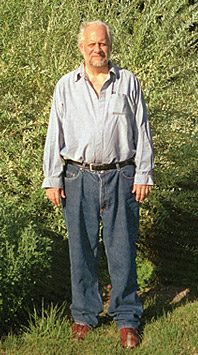
Mary’s picture of me with ‘Raydon’s Favorite’ (2011 Internet only), the best Aster in our Happiness Garden. Suit by Brooks Brothers.

Back to work!