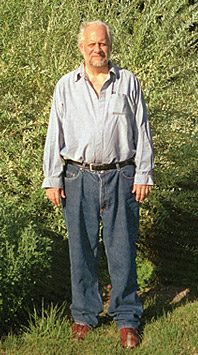
How I became interested in vegetables, part two.

By Lois Burpee

Eight years of boarding school and college menus, and four years of stretching the dollar-a-day budget, while sharing an apartment with a sister or friend in the depression years, were a culinary vacuum, with one exception.  While at Wellesley College, I was introduced to Chinese food.  A group of students who had lived abroad and had some association with China met for inexpensive dinners in Cambridge or Boston at a Chinese restaurant.  Then a friend of one of my college friends opened a Chinese restaurant in Wellesley, and my friend and I visited its kitchen frequently.  I was fascinated with Chinese cooking methods and utensils.  Everything could be prepared so quickly.  These experiences intensified my delight later when I actually had my own vegetable garden.

I was a botany major at college.  After graduating in 1934, I spent two years in Baltimore studying.  Fortunately, my small apartment was near a farmers’ market.  I was hoping to find a job in the field of horticulture, and one day I received a letter suggesting that I write to the W. Atlee Burpee Company.  As luck would have it, the International Flower show was to be held in Baltimore in a few weeks.  The Burpee Company would have a booth there and would need temporary help for the duration of the show.  It was there that I met David Burpee.

After the show, I was asked to come to Philadelphia for an interview and was given the position of technical correspondent for the Flower Department.

I knew little about flower varieties, so spent many Saturday mornings in the summer studying the flowers in the trials field at Fordhook Farms on the edge of Doylestown, Pennsylvania.  Seed of all the flowers listed in the catalog were test grown along with test rows of the breeding work done in California.  There were vegetable trials also, but they were in a distant field.  Occasionally Mr. Burpee joined me there.

After a year I was asked to also do library research for Mr. Burpee on the history and development of marigolds and other major classes of flowers, such as zinnias and petunias.  To make it easier to have access to the library at the Museum of Natural History, I was given an office and typist in downtown Philadelphia.  Occasionally Mr. Burpee stopped in and took me out to lunch.  One day, quite unexpectedly, he proposed.  For the first time I became aware of his ploy to get me away from everyone at the main office.  Soon after, he left for an inspection trip to California and the downtown office was closed.

I came to Fordhook Farm as Mrs. Burpee in July 1938.  Now I had lots of time to spend in the flower rows and also the vegetable trials, but I also had to plan meals.  A huge vegetable garden had been planted for the homestead use.  It seemed that every vegetable in the catalog was growing there.  The gardener brought in baskets of whatever was ready to use (usually larger or beyond the best stage for delicacy) as he had done while Mr. Burpee was a bachelor.  Curiosity got the best of me.  There were so many vegetables listed in the catalog and growing in the vegetable-testing trial rows that I had never heard of.  And why so many varieties – did they have different tastes and textures?  I found out that they did.  I was fortunate to have an experienced cook in the kitchen, as all this was quite different from my past housekeeping experiences.  The following years I selected the seeds for any of the new varieties we were thinking of introducing through the catalog.

The first few years at Fordhook, while our daughter and son were young, I did not do the physical work in the garden but supervised the planting of the seeds so that we would have variety all through the season.  The soil here was different from any I had been used to, fine and heavy – even radishes had to be dug, and the root crops were stubby and tough.

Gradually the old gardener retired and I had to become more involved in the garden because my help did not have experience.  I was determined to do something about the soil.  We had riding horses, plenty of leaves in the fall, and lawn clippings in the summer – why not take advantage of them?  So I selected an area of the garden in which to improve the soil.  It was a strip twenty feet wide, and this width gave me eighteen-foot rows that were just right for most succession plantings for my household of five to six persons and even some extra for freezing.

This size garden I could almost handle by myself, and it became a pleasure to work in.  I did the planting and picking and supervised the weeding.  Yes, weeding needs supervision, for so often it disturbs the roots of the vegetables.  When the plants are young, I cut the weeds off at ground level with a knifelike tool called a horse’s hoof trimmer.  The less the soil is disturbed, the better the plants will grow.

As I plant seeds, I think of the size of the seed, what it is to become, and the struggle it will have to come through the earth.  When the directions on a seed packet say the plants should be ten or more inches apart and seeds are smaller than peas, I sow three or four seeds in each of the ten-inch spaces.  When the seeds sprout, the groups of seedlings help each other through the soil and there will not be gaps in the row.  Later, I cut out the extra plants.  Many new gardeners have said that they hate to thin out young plants, but this must be done.  Unless a plant has space in which to develop properly, it will not produce because it cannot get enough food.

Poring over the catalog to make out my seed order, I got curious as to how the breeders were making their taste tests, and I learned that they usually tested the vegetables raw as they examined them in the fields.  I discussed this with Mr. Burpee, commenting that, since the final use of vegetables was in the home, they ought to be tested as part of a meal.  Well, I gave myself quite a job with this suggestion.  Now our meals frequently included more than one kind of bean, pea, or beet.  Divided vegetable dishes and small garden labels came in handy for identification.  We didn’t always prefer the new introductions, but we discussed all their qualities – plant habit, ease of picking, and such.  We did not find a bean we preferred in flavor to Tenderpod, though others are better producers.

Early on I discovered the Lutz Green Leaf Winterkeeper beet, a late, very sweet variety.  But it’s an ugly duckling, with a tendency to have light rings that breeders do not like.  To me the flavor is the best of all beets, and the foliage stays green when cooked, as it does not have a red stem.  The company dropped this beet from the catalog one year – and I yelled.  It was not a good seller, they said.  Of course not, because the description did not point out its best qualities.  So they included it again with a more “tasteful” description, and it’s still in the catalog.  I’ve found that Lutz Green Leaf Winterkeeper is also the favorite of other kitchen gardeners.

Most of Burpee’s new vegetable introductions to American gardeners came from the Orient, and some indication of how they were cooked there came with them.  So I experimented with how they could be prepared in an American home.  I also had some help from the kitchen testing department of the Farm Journal, a magazine that had a long history of cooperation with the Burpee Company.  Missionaries from lands to which the vegetables were indigenous sent in more recipes.  This was fine, except when I was asked to prepare samples in quantity for the annual garden writers’ luncheons.  Then it was a job.  The writers asked for the recipes, and that is how I really got into vegetable cooking.  I was literally challenged into it.

Excerpt from “Lois Burpee’s Gardener’s Companion and Cookbook” (1983)

Vitamin B

In the middle of writing a non-fiction book on the history of the world’s religions, I despair about finishing before it’s too late.  Writing a book requires much more careful thought than I imagined.  As much heat as light: preparation, outline, sources, sentence and paragraph structure, etc.  It’s true that a plan is crucial.  Also, professionals say that, at some point, I’ll begin rewriting.  However, it won’t be soon.

Certainly, part of the reason for writer’s block is distraction.  But it goes much deeper.  For example, reading on the web warps the mental processes developed over years of normal concentration levels.  One doesn’t read on the internet as much as looks at words.  This habit weakens the mind and negatively affects the ability to think.  People used to say this about the passivity induced by television.  I believe it.  I consider TV to be satanic, but not the web, at least so far.  Recently, a visiting friend told me about the Kindle, a “book machine” from Amazon.  I’d heard positive reports about it from others.  He went out to his car to get it.  What a let-down.  It is not much different from staring at a computer screen.  If anything, the deception caused by the positive PR it has received makes it worse.  “Why lug books around anymore?” my friend asked.  “Why not?” I wondered.  Indeed, what’s the advantage?  I don’t read two or three books at a time and, if I did, a few extra ounces in my briefcase wouldn’t be a problem.  I like books.  Other Kindle disadvantages include an unpleasant tactile experience (it feels dirty) and an inability to flip around, which I love to do.  Also, pressing yet another of life’s many buttons to turn a page – ugh.

However, the main objection is the subtle shift – both away from an individual book and toward an impersonal electronic medium that looks eerily like an eye – that is scary and possesses a profound implication.  Like television, which “sees” for you, Kindle seems to “think”, or read, for you.  No thanks.  There are enough electronic media already, and I have neither a computer nor a cell phone.  I plan to continue living without them.  I write long hand and give everything to my secretary.  I can’t imagine what kids go through these days, in addition to the commonplace temptations of the serpents in the rose garden of new media.  The obesity epidemic is nothing compared to what’s going on in their heads.  I believe computers destroy the ability to think.  I realize this is a cliché.  However, I haven’t faced it until now.  It has made writing harder for me.  I’m used to both reading and writing notes, comments, trip reports, field observations, catalog copy and press releases – much of it on the internet at work.  Writing a serious book of non-fiction is like running a marathon.

P.S.  Isn’t Mrs. Burpee great?!  She went to Wellesley College in the mid 1930s and married the son of our founder after working as an intern at Fordhook Farm.  She helped David Burpee connect with the missionary community in Asia who provided him with samples of unusual vegetables.  Brilliant and creative in her own right, she joined with her friend and fellow missionary brat, Pearl Buck, to found Welcome House, one the nation’s leading orphanages.  Also, after I bought Fordhook, I discovered a pair of large old freezers in the basement.  Mrs. Burpee used to clip newspaper coupons for meat and especially chicken and then drive around to all the grocery stores in her station wagon.  She could feed an army from those freezers.  Dynamite lady.

The excerpt is from her hard-to-find cookbook, Lois Burpee’s Gardener’s Companion and Cookbook.

How I became interested in vegetables, part one.

By Lois Burpee

“How did you, the wife of David Burpee, become interested in vegetables?” is a question frequently asked me—as though I had become a traitor to my husband and his passion for flowers. I am expected to be a flower expert, especially of marigolds, not vegetables. “I just did” is hardly a satisfactory answer. So I got to wondering myself and concluded that perhaps the varied experiences I had with food as I grew from a child—with a child’s typical aversion to vegetables—to a homemaker on Fordhook Farms may have had something to do with it.

I was born in Tiberias, Palestine, where my father, a Scot, had founded a medical mission. But I woke up mentally in Glasgow, Scotland, in 1914, when we had to flee from Palestine at the start of World War I. The war limited variety in our food. Meats, sugar, and fats were strictly rationed. (I remember being shocked at a family dinner when an aunt was so bold as to sprinkle sugar on chocolate pudding. We all would have preferred it sweeter, too, but to be so extravagant was unthinkable.) It was a treat when my father, then medical director of the Oakbank Army Hospital, brought home some beef drippings, which we spread on bread as a flavorful substitute for oleomargarine.

The only vegetables I remember being served at dinner besides potatoes were carrots and turnips, and I thought that to like them one would have to have red hair. In a dish in the center of the dining-room table, tangy garden cress grew on wet absorbent cotton. It looked like a tiny forest, and the peppery leaves had a delightful taste. I have recreated this dish of cress many times. It’s ready to eat ten days after the seed is planted.

Early in 1919, we came to America to visit my mother’s parents in Hartford, Connecticut. Grandma made a delicious crispy pickle of Jerusalem artichokes, which grew in a corner of the backyard. We spent a fairytale summer right next to a real farm in the small town of Winchester. There was so much for me, my three sisters, and my little brother to explore there! Grandpa taught us what berries we could pick, and we walked miles to the best wild strawberry patches. The berries were pretty well mashed by our return, but were still good for shortcake made with hot baking-powder biscuits. We were introduced to corn on the cob, of course, and just couldn’t believe that we were really allowed to pick it up in our fingers.

In the fall of 1919, we returned to Palestine on a small steamer. My most vivid recollections of the trip are the flavor of café au lait—made with condensed milk, of course—and a storm in which the bathtub broke loose. The roll of the ship had got the best of me—I was lying in my berth, eyes glued to the porthole, through which I would sometimes see only sky, then the top of the waves, and, for an interminable length of time, only water. At last, with relief, I saw the skyline and sky again, but for far too short a time. A woman’s voice shrieking, “The bathtub’s broken loose, the bathtub’s broken loose,” broke the spell that the porthole held over me. Fear turned to laughter. We were told later that some of the ship’s cargo had also broken loose and slid off center so the ship could not completely right itself. When we finally reached port, it still listed to one side.

Arriving in Tiberias was a broad leap into an entirely new world—not only a new home, but new languages and new foods. I loved the fruits, but, oh my, the strong flavors of the food! Stuffed eggplant was cooked with tomatoes and both ripe and green olives, some of which were quite bitter. Everything seemed to be sour except lentils and bulgur. But the desserts, served only at feasts, were devastatingly sweet. The memory of little hollow doughnutlike balls full of syrup flavored with rosewater still haunts me. They were made from small balls of raised dough, cooked first in hot fat and then in the syrup. I’ve tried to make them but haven’t been able to get the syrup inside. Eating a whole cherry tomato reminds me of them—not the flavor, of course, but what happens in the mouth.

All vegetables that could be eaten raw—radishes, lettuce, carrots, and, of course, tomatoes—were grown in the hospital compound, where they would not become contaminated. The cress that used to grow in the dish on the table in Scotland sprouted in the garden overnight and was eaten in a few days. Then we replanted more cress.

I was miserable for a long time. Breakfast was the only meal I really liked. Of course, I had to eat what I was served. None of this business of “What would you like?” in those days. Gradually, some dishes became not too distasteful. Curiosity got the best of me. Why did people like these strong-flavored foods? Perhaps I would like them, too. I would find out only by tasting.

We children had a large breakfast with fruits and cooked cereal. Lunch, with the adults, was composed of Arabic dishes: stuffed vegetable marrow, which is like zucchini, cooked in leban (a form of yogurt); eggplant and tomato stew; boiled lentils or bulgur with ground lamb or goat; and occasionally stewed rabbit or chicken, which the family raised. We children had our early supper of eggs, bread, and olives. I learned to love olives and also lebanee, which is like cream cheese but more sour. It was kept in olive oil and spread on fresh Arabic bread, then sprinkled with zatre, a dried mixture of sorrel and winter savory.

I was fascinated by what went on in the outbuildings behind the hospital. In one, the washerwomen did the laundry in huge built-in caldrons. They often brought in plants to nibble on, whatever was growing on the hillsides. So I began to look around the compound grounds and take them all sorts of plants to see if they would eat them, too. Often they ate only the succulent inner part of the stem. Some plants, like a daisy-type one, they said were too soapy.

Two other buildings were the hospital kitchens: one for preparing food for the Moslem and Christian patients and staff, the other a spotless kitchen with lots of shiny pots on the walls where meals were prepared for the Jewish patients. My excursions to these were only in the late afternoon on Saturday, because our days were quite regulated. I watched, fascinated, and sometimes tasted the tidbits offered me. Gradually I sort of got to like Arabic food. Years later I had a yen for the flavors I remembered.

Another Saturday pastime for us children was cooking. We had one of the little buildings along the compound wall for a playroom. Among the few toys we brought with us from the United States were little cast-iron stoves. We each had one and used charcoal for fuel. We were permitted to use anything that grew in the garden as well as eggs from our chickens. We tested the things the washerwomen ate and roasted all sorts of seeds to see if we could make imitation coffee. I remember clearly one day when I got some salt and added it to the potato and egg mess I was cooking. I proudly announced that salt made it taste better. My older sister squelched my pride by responding, “Melani [the cook] always uses salt!”

After my father’s death we came to America again in 1924. By this time Grandpa had retired to the old family homestead in northwestern Connecticut. His occupation now was tending his vegetable garden and one row of sweet peas, which we children had to pick faithfully every other day to keep them blooming. His garden soil was sandy and the season short, but what wonderful vegetables he could grow! And, to my surprise, they were good to eat. Our meals were such traditional New England dishes as fresh peas with young carrots lightly seasoned with a slice of salt pork fat (not smoked) and desserts sweetened with dark molasses. I can still visualize Grandpa poring over the Burpee seed catalog in the winter, planning his next year’s garden.

When mother took over the kitchen, she had to relearn how to cook. There was one huge white cookbook to which she often referred, and the food order was phoned in to the one butcher and one grocer in the town once a week. To save time (or maybe it was an old custom), one large piece of meat was ordered. We had it hot on Sunday, cold on Monday, and what we children called third-day roast on Tuesday. I have followed this tradition in some ways, but have the hot roast on Saturday and the cold meat on Sunday, as I find a day of rest from cooking quite relaxing. The old New England custom of having hot baked beans and brown bread on Saturday and eating them cold on Sunday is really not a bad idea. Instead of cold baked beans, I do something with all the leftover vegetables in the refrigerator, such as making a casserole with a cheese cream  sauce.

Grandma made the gingerbread. This was important because Grandpa had to have the gingerbread every night for supper. She baked it in a large blackened pan about three inches deep that was almost as large as the oven.

My two older sisters took over the few times when Mother was not home. They objected to my being in the kitchen because they said I was always washing my hands and getting in the way. My oldest sister usually made a cake. One day they were also away. I was to be in charge of preparing dinner (a cold meat day, of course). This was my opportunity to show my cooking prowess. I decided to make a sponge cake, which would not need frosting. I had Grandma’s gingerbread pan in mind for cooking it in.

So I got out the one big cookbook and looked up the recipe. It called for one cup of flour. How could that possibly make enough for eight people and have some left over? I decided to triple the recipe and increase the amount of lemon extract, as it seemed much too little. I put my batter in the gingerbread pan and placed it in the bottom of the hot oven to bake (I didn’t know how to raise the shelf). Soon there was a delightful aroma—then one of burning. I peeked in the oven. The cake was flowing over the edges of the pan. Oh, well I thought, let it bake anyway. I did know that I should not disturb a baking cake. The burning smell got stronger and stronger, but it was not yet time to take the cake from the oven.

When the time did come, the cake looked fine on top, but the oven was a mess. All the family returned for dinner, and I proudly served the cake in the large pan. My oldest sister facetiously remarked, “Are we still eating this cake?” Of course, it was burnt on the bottom, and the lemon flavor was overwhelming. I was so disappointed. To this day, I can’t stand synthetic lemon seasoning, and I seldom bake a cake.

To be continued.

Virtual Horticulture

I served as President of The American Horticultural Society for four years, 1990 to 1993.  For the first half of its existence the AHS headquartered in a series of offices in DC, including a second floor walk up over a Chinese restaurant.  When I joined in 1989, it occupied River Farm, a spectacular 27-acre estate with a handsome main house, ballroom, several barns and a small garden on the banks of the Potomac River outside Alexandria, Virginia—a far cry from a cramped downtown office.  I thought River Farm made more sense as a botanical garden than headquarters for an information and advocacy organization serving the continental US, plus Alaska and Hawaii.  However, in 1973 the board of directors accepted philanthropist Enid Haupt’s donation of the property.  The following fifteen years weren’t kind to the AHS.  It reminded me of other turnarounds in its level of difficulty, complexity, and denial among the players.  In other words, it was a bit of a mess. As an outsider facing an organization on the brink of insolvency, I was expected to change things, which I did, unfortunately not enough to relocate the headquarters.  But we started a few nationwide programs—the Children’s Gardening Symposium remains intact—and raised enough money to avoid disaster.

It was an exciting time. The staff was very competent. I had many meetings with luminaries such as Mrs. Haupt, Elizabeth Miller and the environmentalist Maurice Strong. I became acquainted with Society members across the nation.  I tried to change the board’s role, and mostly succeeded.  We created a new position of board chairman and a paid one for the next president.  However, if its mission was to educate Americans about horticulture, the AHS needed a revolution.  Since it was nearly broke, I suggested selling the property, moving back to DC, strengthening the staff with retired teachers, gardening evangelists and lobbyist type advocates, and starting an international children’s gardening project.  “Spread the word”, I said.  Alas, the board disagreed. They were wrong.

Horticulture is more diverse in the US than in any other nation.  So, I asked, why have a centralized British-style botanical garden model? The US isn’t similar to the horticulturally homogeneous UK, to say the least.  Few gardeners in Arizona put much value on demonstration beds along the Potomac.  Yet the board of directors viewed River Farm as the Society’s centerpiece.  This distraction prevented the AHS from focusing on its mission.  Instead of using our limited resources to help other horticultural groups across the country, we beautified the headquarters in Virginia.  The legendary former president of Toro, David Lilly, was the lone maverick on the board who recruited me for the volunteer presidency. A kind and thoughtful man, he taught me much about organizational behavior.  His favorite saying is, “I’m moving as fast as I can to catch up with my people because I am their leader”.  However, he was the only director who agreed with me.

Imagine a national non-profit organization that creates and sponsors annually a horticultural seminar in every state.  “The sun never sets on the AHS”, I quipped.  The board was unresponsive. Some directors sincerely hated the idea.  They had fallen in love with River Farm—building up its tiny collection and putting demonstration beds everywhere. Ironically, the property lost its charm in the process, illustrating the double jeopardy of doing the wrong thing and not doing the right thing.  Time may correct the situation.  But the AHS has a rare chance to become a “virtual” gardening non-profit organization.  Why let the horticulture magazines travel everywhere giving seminars?  Why allow a vacuum to exist in the aggressive advocacy, promotion and publicity of gardening on a national level?

The original 1923 mission was to promote gardening through magazines and bulletins about experimental horticultural techniques, new cultivars and plant collecting, supported by the membership.  It heavily emphasized ornamentals. Growing flowers was deemed to be more upscale by the new middle class than keeping a vegetable garden. The AHS was to get the word out, especially to the hinterlands.  However, today the hinterlands include California, population 37 million, and 50% greater in size than England. One has to adjust to history; telling Californians something new has become more challenging.  However, the AHS needs both to respond to the growing amateur gardener population and to persuade Congress of the importance of home gardening.  DC is an ideal location.  A reinvigorated mission will connect folks from Florida to Alaska, and from Maine to Arizona.  Dues paying membership was over 60,000 when I left in 1993—it’s now 25,000. That’s a wake-up call. The American Horticultural Society will remain at a crossroads until it focuses profoundly on its mission.

Square Feet

As house prices and new construction fall, the homebuyer has not only more choices, but tougher economic decisions to make due to tighter credit. Lenders are narrowing their focus on high-worth clients.  Middle class buyers face declining wages, workforce reductions and a pre-recession economy of $4.00/gallon gas and climbing food prices.  If they’re vacating a long-term house or condo, they must both sell into a declining market filled with homes for sale and get financing from a skeptical loan officer at a troubled bank. However, on the positive side, this is an opportunity to look at domestic architecture and garden design and ask, “What do we do now?”

Suggestions abound, from winsome “saltboxes” and bungalows—so perfect for child rearing—to cape-cods for a more upscale traditional feel and rambling modern ranches for a more inside-outside flow. A family of four probably doesn’t need much more than 2,000 square feet.  “Energy” should be tight, with its diffusion handled by no more than three vistas and four doors.  Keeping the family together begins with physical proximity, what used to be called “the hearth”.  Imagine a dinner table that is in proportion to a typical 5,000 square foot house; its size wouldn’t allow the family to see each other well, much less speak casually.  The old saying, “A man’s house is his castle”, is being taken a bit too literally these days.

There is a remarkable story about a family that won HGTV’s “Dream House” Sweepstakes a few years ago.  The parents became so uncomfortable in their new palatial 6,500 square foot home that they gathered their two young boys and the four of them made a camp on the mezzanine of the second floor landing, which was itself the size of a small house and had a view of the front door.  They disliked the alienating effect of living in a conglomeration of five normal-sized houses, put it up for sale and moved back to their bungalow.  However, they had difficulty selling the behemoth and continued to pay high maintenance fees and taxes—some dream house. Now HGTV’s website includes advice on how to cope with the responsibilities of winning this somewhat dubious grand prize. That’s show business.

On the other hand, for those who want their home to reflect how far they’ve come in their lives, the best I’ve seen lately were on the Street of Dreams in suburban Seattle in 2007.  However, I saw them only on the web, since they were torched by environmental arsonists last March. Long years of hard work deserve a pay-off, and these were the homes contemporary dreams are made of.  While there might be more cutting edge environmental houses in Europe, none had their scale. Of course, their size and location were criticized in the local press, which mostly ignored the ecoterrorist attack, committed probably by the same group that burned down the horticulture research buildings at the University of Washington a few years earlier.  Environmental impact from toxic runoff into trout streams deserves torch-burning private homes?  No kidding?  When ecologists become flame-freaks, the fate of the environment darkens, indeed.  Perhaps the press played down the investigation in order to deny the criminals publicity and protect the public from copycats. God bless the FBI.

For new homes a fraction of the size of those on the Street of Dreams, check this out.  I’ve known Martha Stewart since 1991, and used some of her recipes and branded products.  I find them interesting, but confess more a professional bias than true feeling.  Therefore, I was surprised to find a Martha Stewart creation that genuinely appealed to me.  Her houses are perfectly sized for a family of four or five, and extraordinarily well designed.  The price is right too.  The only downside may be their location. Most require long commutes.  However, she and KB have dealt sanely with the current rage for excessive size. The charming homes are free of the massive great rooms that are ubiquitous in million dollar estates, yet are ample for entertaining and cozy without being saccharine.  Some have incredible floor plans; she and KB nailed it.

In track housing—upscale or down—gardens are usually left to the homeowner to figure out, in most cases with the help or interference of a neighborhood association.  This is unfortunate.  Contract landscapers work within narrow specifications and don’t rock the boat. Most customers have little interest in the yard, much less the garden, and realtors panic outdoors.  Let’s hope housing trends change toward smaller houses and larger yards, reflecting both rising fuel costs and the aging baby-boomer’s fascination with gardens.  That’s the only silver lining I can see.  History is on the side of architects and designers like Sara Susanka and Julie Moir Messervy. Martha Stewart should join with them to create a new approach to affordable urban housing.

Get Rich Quick

Everyone has fantasies of instant wealth.  Here are a few of mine: 

All Advertisements TV – People say there’s too much hype on the tube. However, the distasteful craziness is in the programming, not the ads. Imagine a channel with one great ad after another. Also, there could be themed hours such as cars, movies, furniture, perfume, clothing, beer, “greatest hits”, e.g., the E trade baby, nostalgia and so on.
 
All Obit Newspaper – Imagine if everyone received a full-fledged obituary. People’s snowflake-like stories deserve to be in print.  This could save the newspaper business.

Analogue LCD/LED Watch – Back in the 70s, a friend and I cooked this up after being frustrated by not seeing the rest of the day on the readouts of our digital watches.  We discussed it with a Chicago patent attorney who was surprised that no one had thought of it, which made us feel great. Then we ran out of money.

Barbie Movie – I pitched this to Mattel in the early 90s.  She is a horse trainer’s daughter, attending veterinary school on a scholarship and gets caught up in a racetrack bribery scheme.  The bad guys blackmail her dad.  Ken is a fellow student who helps her bust the case and save Pop from jail.  Climax is a big race.  The logic was that, although some people may not like Barbie, everyone loves horses.  I saw huge sales in India and the Middle East and asked for a percentage.  No dice.

Bible in Books – I have always wanted to read the Bible on airplane rides and hiking trips.  However, most editions are bulky, heavy and printed in tiny type. Why not divide it like a perennial clump?  Someone created the Yale Shakespeare in the 1920s:  forty small mid-blue hardbacks that lie flat.  I pitched this to a New York City publisher in 1996 and got turned away.  In ’99, Grove Press/Atlantic released “The Books of the Bible”, first in an excellent hardback series that is impossible to find and later in a paperback box set with smaller sized volumes printed in small type and bound too stiffly to lie flat—not worth finding.

CDs In Album Sleeves – I can’t read the tiny print on CD packaging, even with my glasses.  I miss large record covers.  Some artists got their start creating album photos and illustrations, while the classical and jazz “liner notes” were often brilliant. Besides, flimsy CD boxes are annoying. Why not rigidly package CD disks in the LP-sized sleeves?

“Santatra” – A retirement Christmas gig could be to sing both holiday and Sinatra songs in a semi-Santa outfit at resorts, Moose clubs and retirement homes.  Especially tropical resorts.  Then, in the summer, mix Sinatra with Handel and tour gardens under the stage name “Ol’ Green Man”.


New Caryopsis Blues

Sitting on the table in the doctor’s office, listening to her run through the issues of weight and diet (my first amber light), I suddenly realized that, on a certain level at an acute angle in fluorescent light, I’d eaten unwisely all my life.  As she droned, I pondered the miscues, searching my mind for the big answer.  The first hint was her prohibition of bowls of steaming pasta: 
“Try cutting pasta out altogether for awhile.”
“Why?”
“Carbs.”
“Don’t I need them, you know, to live?”
“Not the ones from pasta—look, just try to eat vegetables instead. They have plenty of carbs.”
“But. . .” 
“And notch up the exercise.”
“What about rice?” 
“No.”

And that was when it hit me, like a poison dart behind the ear.  The kicker was rice, specifically its preternatural sweetness.  “Wow!”,  I thought and slapped my forehead.  I have been in the seed business for thirty years and never connected the dots.  All grains are fruits; while I knew this, I didn’t realize it.  That’s why they’re so delicious, like bananas to a monkey.  However, they differ only technically from custard apples.  If I didn’t quit eating grains in the quantity my doctor and nurses found incredible, I was going to stray into the red zone.  “Avoid rich food”, my grandfather had said.  He didn’t know the half of it.

The doctor added that mass plays a big role, so to speak.  Double duh.  But I needed to hear it.  We discussed my eating habits:
“Did you really eat a whole marrow squash, George?  That’s interesting, but make sure your plate is empty after that, because you’re getting more than you need.  Try eating less. And notch up the exercise.”

The breakthrough was the connection between grapefruit and wheat.  Bread is like fruit with fat mixed in. Who knew?  Being in the seed business, I should have. 

What Is Germany?

Many years ago, as a result of library research on the great German poet Else Lasker-Schuler, I came across many essays about her and her colleagues.  What struck me most was their unshakeable love of Germany.  Even after the Holocaust, despite their Jewish identity and living in exile with the memories of dead friends and family, they remembered their beloved Germany.  I marveled at this and mistook it for an expression of abnormal psychology.

I didn’t know it was a simpler and, for its naturalness, stronger self-identification with their homeland than that of, for example, Bavarians.  Far from being what today one would refer to as “ethnic”, these mostly well-educated sons and daughters of middle class Jewish families didn’t merely blend with their surroundings, they often bore the German standard higher than their neighbors.  In the 19th century, “Germany” was still a new idea imposed on principalities, districts, leagues and nations.  However, everyone spoke German: a variant or dialect at home, “high German” at work and “polite German” in public. Germans are more exacting and self-conscious in their speech and writing than the British.  The north and central parts of Europe were an enormous linguistic federation of people who spoke German.  But, unlike the Jew, the gentile’s home state was the only one in his heart.  In contrast, the new creation known as “Germany” had a modern identity that transcended these homeland borders.  Ironically, this made the Jew more “German” than the average German.

I remember my paternal grandmother saying she was from Schleswig-Holstein:  “Aus Kiel gekommen”.  It was actually a small town west of Kiel and much closer to Denmark than the rest of Germany.  In turn, though born in the far north, she was from ancestors a world away, near the eastern Saxon city of Chemnitz, the family still identifying itself as such.  (My grandmother introduced me to tulips, and later to weeding.  She was nearly six feet, strong and a bit intimidating—probably carried some Dutch and Celtic blood.)

It’s not well known that German grain and cattle farmers were as restless as the pioneers of the Old West.  For instance, the “prairie schooners” that fanned across the plains were modeled on German farm wagons.  Even my paternal grandfather—baptized George Jacob Balzheiser—was conscious of his roots in the “Rheinfalz”, not far from Worms.  His grandfather made the trip over, first to New Orleans, then Memphis and finally Cincinnati, wearing his worldly possessions including a letter of introduction to relatives who worked in a slaughterhouse.  Yet before coming to the Rhineland, the paternal clan had lived in the northwest, or Lower Saxony.  They were “Niedersachsen”, not “Deutsch” or “German”—that was only the basic language, and, in their case, an almost Dutch form of it.  Perhaps it was this great variation and dynamism that, in part, made Germany attractive to Jewish communities.  Certainly, the familiar continental climate of North America enabled German immigrants to dominate, relatively quickly, the US agricultural industry.

Although I never knew my grandfather, I visited a couple of ancestral haunts during a summer vacation in 1973.  Dad organized the trip and met me there.  Our relative and tour guide was a pleasant elderly man who was nearly blind, but still able to walk with us and point out the apartment building that stood on the site of the Balzheiser home.  I remember Dad taking a photograph of the old gentleman rubbing his hand on the wall, as if to make sure it was the right one.

Leonard Dubkin

Pity that few remember this remarkable nature writer.  Most likely due to the oversight of Chicago as a serious literary center by the New York publishing world since the 1920s when he was beginning.  Dubkin specialized in birds, insects and bats in cities, which is, ironically, trendy now.  Googling him yields only a few used bookstores.  Yet he wrote a weekly newspaper column for fifteen years and published seven books.

His best is The White Lady, an incredible account of his discovery of an albino bat in a grotto of overgrown bushes and trees in an abandoned lot, probably on the near west side of Chicago.  He doesn’t tell; it could have been anywhere in the swampy city, but the two branches of the Chicago River meet there, and bats thrive near water.  He watched the birth of the white baby bat from his post at the bottom of the enclosure, looking up at the mother, one of dozens hanging there birthing away.  The white colored head emerging was bright enough in the somber light to catch his eye.  Nature writing rarely gets better. 

The Murmur of Wings, his most popular, has been reprinted several times and most lately by Kessinger Publishing, known for reprinting obscure, hard-to-find literature in large, attractively priced editions. Churchill’s individual books are there, for example.  The Murmur of Wings is sublimely written.  Dubkin combined a sharp eye with a love of nature and an ingenuous style that ennobles each tiny creature.  His stories are as unexpected as his subjects.

One of his last books was an oddity:  Wolf Point, a short yet panoramic history of a tiny island in the Chicago River shadowed then—as now—by skyscrapers.  It seems forced and experimental and, while not bad, ranks lowest among his books, mainly because it’s not about nature.

We are overrun by noisy nature writers these days.  While a few reach for the standards set by Thoreau, Muir and Burroughs, none except Gary Paul Nabhan have come close. They should read Dubkin.

Fordhook Open House

We held the July 12 Open House at Heronswood’s new gardens in Doylestown, PA, welcoming over 430 people from across the northeast and mid-Atlantic states. We conducted seven garden tours, sold over a thousand rare plants and gave away a young hydrangea to the first 250 guests. It was a great day, though very hot. Our next one, out in Kingston, Washington, will be on July 26th.

Here are some highlights:

Garden Conservancy
Ready to go: greeting tables with The Garden Conservancy and Heronswood Nursery literature, and buckets of free spring water bottles; research greenhouse in background.
Garden Tour
One of the hourly tours begins under the big sycamore tree. The first floor of the historic Burpee house was also open.
Carolina Shade Garden
Southeast edge of the Carolina Shade Garden, named for my mother.
Great Lawn
Great lawn with the entry to the Springhouse Garden.

Hans Miller

Vice President of Finance, Hans Miller and his son, Jonathan, in the plant sales area.
Container Display Garden
Container display in the old horse paddock.
George Ball
Heronswood owner George Ball talks with a morning guest.
Hydrangea give away
We gave away hydrangea plants to the first 250 visitors. Most couples took only one, so we were distributing them most of the day.